Vietnam is not just a country I visited. It became a second home.
What began as a single journey grew into decades of friendships, family, discovery, and an ever-deepening appreciation for the people, traditions, and food that make Vietnam unlike anywhere else in the world.
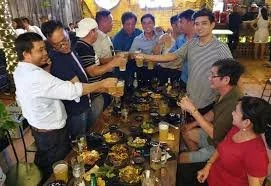
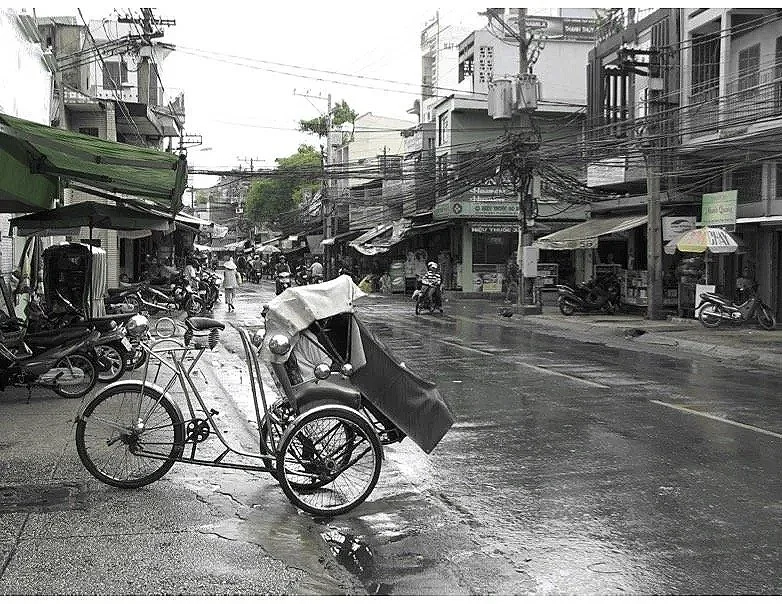
From the crowded streets of Saigon to quiet family kitchens, roadside grills, bustling markets, and celebrations shared around crowded tables, Vietnam changed the way I think about food, hospitality, and community.
The lessons I learned there continue to shape Broken Dreams today.
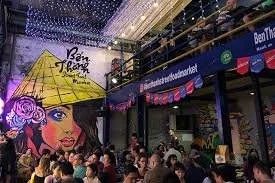
In the fall of 1999, during my first week in Vietnam, I found myself wandering through Bến Thành Market in downtown Saigon.
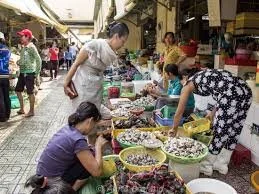
The narrow aisles were packed with vendors selling everything imaginable: clothing, fabric, pots, pans, shoes, household goods, and things I couldn't even identify. Sellers grabbed at my sleeves, smiled, laughed, and called out in broken English.
"Buy this."
"Come look."
"Good price."
The entire market felt like a sensory explosion.
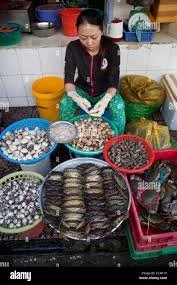
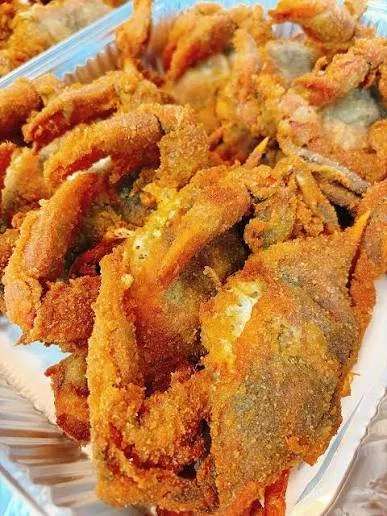
As I worked my way toward the wet market in the back, I noticed something that immediately caught my attention: live soft shell crabs.
Back home in California, soft shell crabs were considered a seasonal delicacy. Here they were piled high and selling for almost nothing. Standing beside me was a young Vietnamese woman whose family friend had asked her to show me around the city.
Looking at those crabs, an idea suddenly appeared.
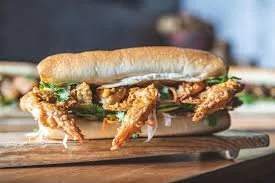
What if I made soft shell crab bánh mì right here in the middle of the market?
I already loved bánh mì long before I arrived in Vietnam. Back in Oakland, I had spent years searching for the perfect one. Now I was standing in the middle of one of the most famous markets in the country wondering if I could actually cook one myself.
The first challenge was bread.
Just outside one of the market entrances I spotted a small bánh mì cart. After dodging bicycles, motorbikes, carts, and pedestrians, I bought a dozen sandwiches with everything except the meat.
The second challenge was frying the crabs.
Back inside the market, I found a woman sitting on a tiny red plastic stool frying tofu in a large metal basin filled with oil. My friend translated as I asked whether she would mind if I borrowed her setup for a few minutes to fry some soft shell crabs.
To my surprise, she smiled and said yes.
I bought a dozen crabs, tracked down some tempura flour from another vendor, borrowed a plastic bowl, bought a beer, and mixed up a batter.
By this point people had begun gathering around to watch.
No one seemed quite sure what the foreigner was doing.
I sat down on the little stool, dipped the crabs into the batter, and began frying.
The crowd kept growing.
Two deep.
Three deep.
Four deep.
Everyone was talking at once.
I had no idea what they were saying.
At the time, I was far too busy frying crabs to pay attention, and even if I had stopped to listen, it would be years before I could understand or speak Vietnamese well enough to follow the conversation around me.
When the crabs were finished, I found a tray, split the sandwiches open, tucked the fried soft shell crabs inside, cut everything in half with a pair of market scissors, and started handing them out.
People laughed.
People smiled.
People ate.
People immediately wanted more.
As my friend and I finally walked away carrying our own sandwiches, I could hear people calling something after me.
Again and again.
I asked her what they were saying.
She laughed.
"They're calling you Vua Bếp."
"What does that mean?"
"Kitchen King."
I still smile when I think about that day.
I wasn't serving food in a restaurant. I wasn't trying to impress anyone. I was simply participating in everyday life, surrounded by strangers who welcomed me into their world and allowed me to contribute something of my own.
It was one of those rare moments when everything feels perfectly aligned.
I remember thinking to myself:
This is where I'm supposed to be.
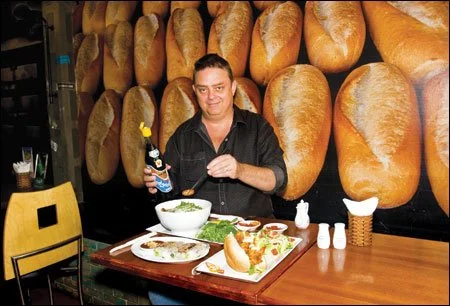
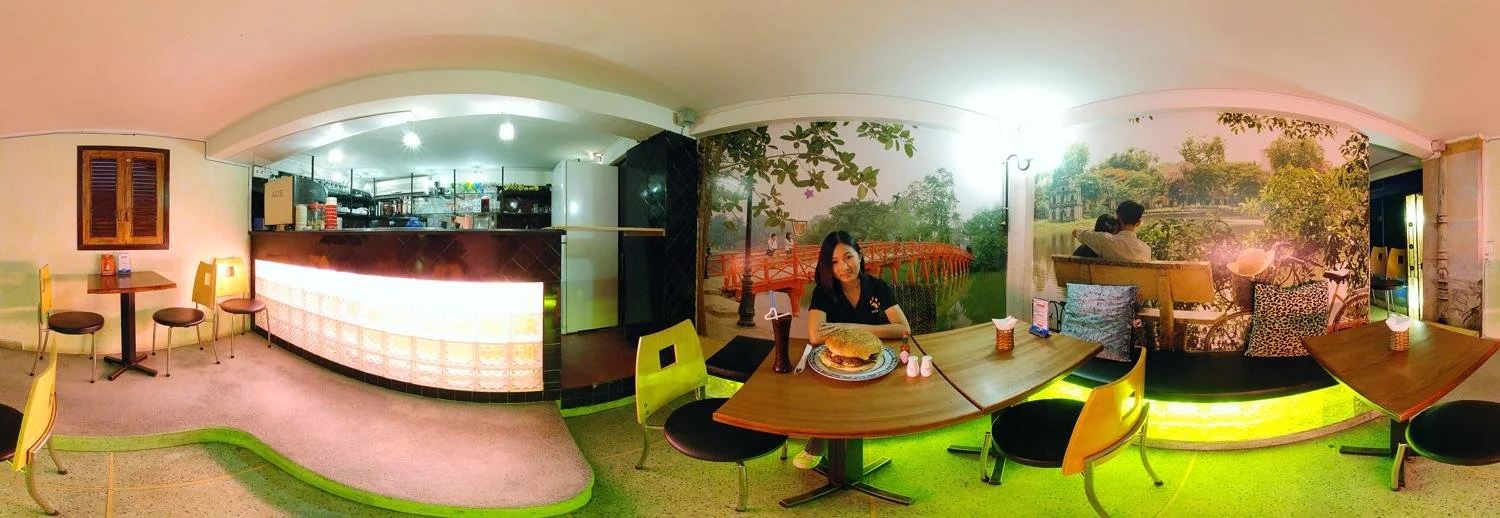
Years later, many of those experiments found their way onto the menu at Black Cat 13.
What began as a spontaneous soft shell crab bánh mì in the middle of a crowded Saigon market evolved into an entire collection of sandwiches inspired by my travels throughout Vietnam. Each one told the story of a different place, a different meal, and a different lesson learned along the way.
The Sài Gòn celebrated the classic deli style bánh mì found throughout southern Vietnam. The Thanh Hóa reflected the simple perfection of roasted pork and pork glaze I discovered while traveling through the north. The Hà Nội drew inspiration from the legendary chả cá lã vọng, the turmeric and dill fish dish that has defined Hanoi cuisine for generations. The Nha Trang paid tribute to the seafood traditions of Vietnam's central coast. The Paris reflected the French influence still woven throughout Vietnamese cafés and bakeries. The Pagoda honored Vietnam's rich vegetarian traditions.
Together, they became more than sandwiches. They became a culinary map of Vietnam.
The recognition arrived in a way I never expected.
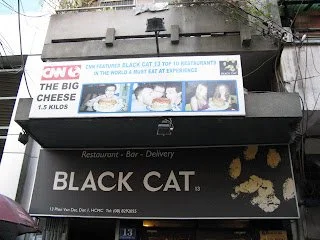
On Halloween morning, October 31, 2006, my phone began ringing. Friends from the United States Consulate kept calling.
"Black Cat is on CNN."
I laughed and assumed they were making a joke. It was Halloween, after all, and the restaurant was called Black Cat.
"No," they said. "You don't understand. It's on CNN."
Only then did I realize they were serious.
CNN.com had included Black Cat 13 among its "Top 10 Places in the World You Must Eat At."
For a small independent restaurant tucked away in Vietnam, the recognition felt surreal. I wasn't a celebrity chef. I wasn't part of a restaurant group. I hadn't built the restaurant with investors, consultants, or marketing teams. The menu had grown out of years spent wandering markets, talking with vendors, eating at plastic tables, and learning from cooks who often had no idea they were teaching me.
Looking back, the recognition wasn't really about a single restaurant. It was about the people who welcomed me into their world. It was about the street vendors, market cooks, fishermen, bakers, and families who shared their food, their stories, and their traditions.
The soft shell crab bánh mì was only one sandwich on one menu.
But it represented everything I loved about Vietnam.